

When it comes to mobility, choosing the right wheelchair is crucial to ensure the user’s comfort and quality of life. If you’ve ever wondered “How to choose a wheelchair?”, you’re in the right place. Let’s break down the key aspects you should consider to make an informed and safe choice.

Personalized Evaluation: The First Step
In our center, the first thing we do is a personalized evaluation. Why? Because every person has unique physical and environmental needs. According to studies from ncbi.nlm.nih.gov, an incorrect fit can lead to discomfort and long-term injuries. Therefore, this process should be carried out by trained orthopedic technicians. What we see in consultation is that when the fit is precise, the improvement in mobility and comfort is remarkable.
Types of Wheelchairs: Which One is Right for You?
There are several types of wheelchairs, each with its own advantages and disadvantages. Let’s take a look at them:
Manual Wheelchairs
These are the most common and are divided into two types: self-propelled and transit. Self-propelled wheelchairs are operated by the user using rims on the rear wheels, ideal for those with good upper body control. Transit wheelchairs, on the other hand, are pushed by another person and are lighter.
Electric Wheelchairs
Perfect for people with significant reduced mobility. They are also ideal for long distances and offer various functionalities, such as seat tilt and elevation. The downside is that they tend to be heavier and more expensive.
Sports Wheelchairs
Designed for those who practice adapted sports. They are lightweight and highly maneuverable but are not the best option for daily use due to their specialized design.
Measurements to Consider: Adjusting the Chair to Your Body
Comfort is in the details, and in the case of wheelchairs, measurements are everything. Incorrect dimensions can cause postural and pressure problems. Therefore, it is essential to consider:
Seat Width
It should be wide enough for the user to feel comfortable but not so large that it causes lateral sliding. The standard measurement is hip width plus about 2 cm.
Seat Depth
The proper depth will prevent the user from sliding forward. The rule is that there should be about a 5 cm space between the edge of the seat and the back of the knees.
Backrest Height
Depends on the user’s postural needs. A higher backrest offers more support but can limit mobility in self-propelled chairs.
Seat-to-Floor Height
This is vital for comfort and transferring to other surfaces. It should be measured from the floor to the underside of the user’s thigh, ensuring that the feet are flat on the floor or on the footrests.
Adjustment and Adaptation: Making the Chair Truly Yours
Once the chair is selected, the next crucial step is adjustment and adaptation. According to ncbi.nlm.nih.gov, proper adjustment of cushions and accessories improves postural support and functionality.
Cushions and Postural Support
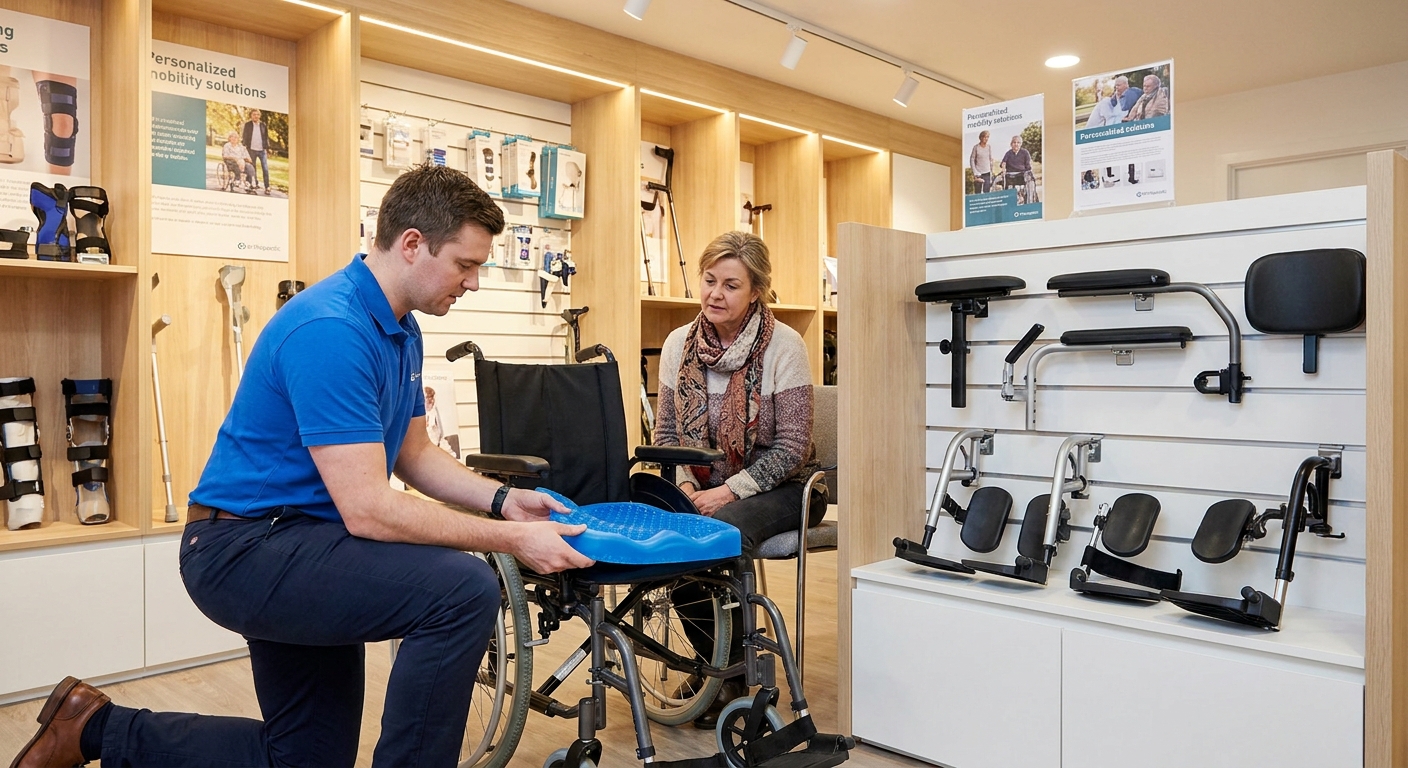
A good cushion prevents pressure ulcers and improves comfort. There are foam, gel, and air cushions, each with its advantages depending on specific needs.
Armrests and Footrests
They should be adjustable to provide maximum comfort and facilitate transfers. Flip-up armrests and adjustable footrests are especially useful.
Wheels and Handling
The right wheels are essential for mobility. Small front wheels facilitate maneuverability indoors, while larger rear wheels are better for outdoors.

Training in Use and Maintenance: Extending the Life of Your Chair
Acquiring a wheelchair is just the beginning. Knowing how to use and maintain it is equally important. In fact, training in use and maintenance is key to ensuring its longevity and functionality.
Proper Use
Both the user and caregivers should receive training on how to handle the wheelchair. This includes going up and down curbs, handling different surfaces, and adjusting components.
Basic Maintenance
Regular maintenance includes checking wheels, brakes, and cushions. Keeping the chair clean and free of dust and dirt prolongs its lifespan.
Design and Material Considerations: Choosing the Best
The material of the frame and the design of the chair influence its weight and maneuverability. According to ocu.org, aluminum is a popular choice due to its lightness.
Weight and Portability
Aluminum wheelchairs are lighter and easier to transport. In contrast, steel ones are more durable but heavier.
Dimensions and Spaces
It is crucial to ensure that the chair fits the spaces where it will be used, such as doors and elevators. This prevents frustrations and accidents.
Additional Accessories and Functionalities: Personalize Your Experience
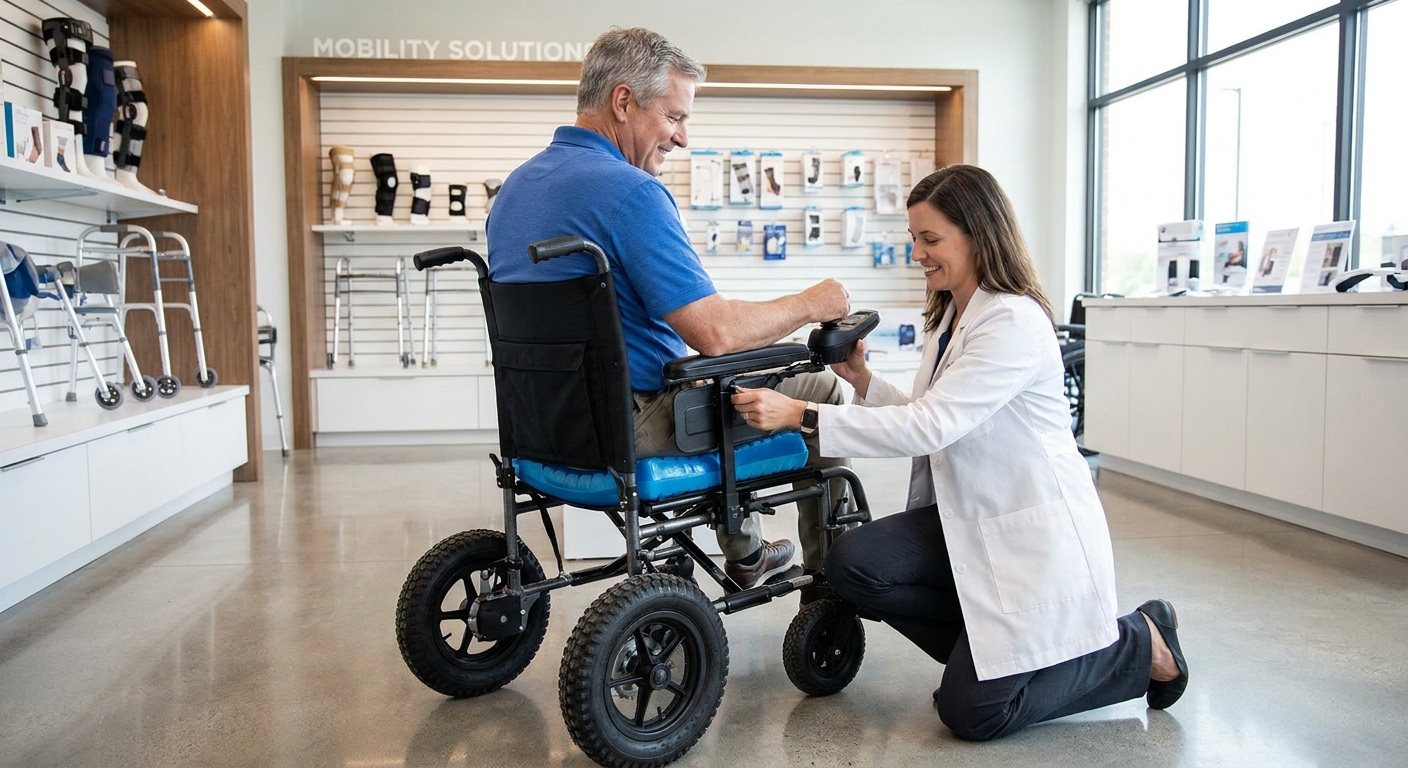
Depending on the user’s needs, accessories can make a big difference. Flip-up armrests, all-terrain wheels, or even cup holders can enhance the daily experience.
Accessory Comparison Table
| Accessory | Main Benefit |
|---|---|
| Flip-up Armrests | Facilitate transfers |
| All-terrain Wheels | Improve outdoor mobility |
| Gel Cushions | Greater comfort and protection |
Visit Ortopedia Fresneda
At Ortopedia Fresneda, we have been helping our neighbors in Xirivella find the perfect orthopedic solution for their needs since 1989. Do you have questions about how to choose a wheelchair? Come visit us. Our team is here to offer personalized advice and guide you every step of the way. Mobility and comfort are not just our priority; they are our passion.
Real Clinical Cases: Lessons Learned
Throughout our experience in the center, we have seen many cases of patients needing a suitable wheelchair. A notable example is a young athlete who suffered a spinal cord injury. Initially, he opted for a standard wheelchair but soon realized it didn’t meet his active mobility needs. After a thorough evaluation, we recommended an ultra-light wheelchair, specifically designed for sports. This not only improved his performance but also his daily quality of life. In another case, an elderly woman with rheumatoid arthritis found relief using a chair with a special cushion that alleviated pressure on her joints. These examples highlight the importance of an informed and personalized choice. Each person is unique, and their wheelchair should reflect that individuality.
Comparison with Other Technical Aids
When we think of assisted mobility, the wheelchair is often the first option that comes to mind. However, there are other technical aids that can complement or even replace the need for a wheelchair in certain cases. For example, walkers and canes are viable alternatives for those who need support but still have some walking ability. Additionally, electric scooters can be an option for people with reduced mobility seeking greater independence over longer distances. Each device has its advantages and limitations. Walkers offer stability but require upper limb strength. Electric scooters provide quick mobility but are not practical in tight spaces. Comparing these options helps determine which solution is most suitable for your lifestyle and specific needs.
Recommendations for the Elderly: Safety and Comfort
When selecting a wheelchair for the elderly, there are specific aspects we must consider. Safety is paramount; therefore, we look for chairs with secure and durable braking systems. Additionally, comfort is crucial to prevent the development of pressure ulcers. Chairs with ergonomic cushions and lumbar support can make a significant difference in daily well-being. Another important factor is ease of use. Lightweight and foldable chairs are ideal for seniors who need to transport them by car or store them frequently. Moreover, seniors can greatly benefit from chairs with leg lifters and adjustable headrests, which facilitate optimal comfort during prolonged use. Finally, we must ensure that the elderly person and their environment are well-informed about the safe handling and maintenance of the equipment.
Myths About Wheelchairs: Debunking Popular Beliefs
There are many myths about wheelchair use that can negatively influence purchasing decisions. One of the most common myths is that wheelchairs are only for people who cannot walk at all. In reality, many people with limited mobility use wheelchairs to conserve energy and prevent injuries. Another myth is that all wheelchairs are the same, when in fact there is a wide variety of types, each designed for specific needs. It is also wrongly believed that wheelchairs are uncomfortable and difficult to handle. However, advances in design and technology have significantly improved the ergonomics and maneuverability of modern chairs. Debunking these myths is crucial for potential users to make informed decisions and not be influenced by misconceptions.
Recent Scientific Evidence on the Impact of Wheelchairs
Recent research has shed light on how appropriate wheelchairs can improve the quality of life for their users. A study published in the “Journal of Rehabilitation Research & Development” found that using a well-fitted wheelchair is associated with reduced pain and increased functional independence. Additionally, another study from the “American Journal of Physical Medicine & Rehabilitation” demonstrated that customizing wheelchairs can have a positive impact on users’ mental health by improving their self-esteem and reducing depression. These studies underscore the importance of choosing a wheelchair that not only fits physically but also considers the user’s emotional needs. Science supports the idea that a proper choice can transform lives, providing not only mobility but also overall well-being.
Anonymized Real Clinical Cases: Success Stories and Learning
In our center, we have seen numerous cases where the right choice of wheelchair has transformed our patients’ quality of life. One of the most notable cases is that of a patient with advanced multiple sclerosis who, after a personalized evaluation, opted for an electric wheelchair with specific features that allowed him to improve his daily mobility and significantly reduce physical effort. During follow-up, we observed improvements not only in his independence but also in his emotional well-being.
On the other hand, a patient with a spinal cord injury was using a manual wheelchair that did not fit her body dimensions correctly. After making adjustments to the seat and backrest, she achieved a more ergonomic posture, which reduced her back pain and increased her comfort. These stories teach us the importance of an individualized approach and the continuous adaptation of mobility solutions to changing needs.
Comparison with Other Techniques or Treatments: Wheelchairs vs. Exoskeletons
In consultation, we are frequently asked about the differences between wheelchairs and exoskeletons, especially in terms of rehabilitation and mobility. Although exoskeletons are a promising emerging technology, wheelchairs remain the most accessible and versatile option for many people. Exoskeletons can be useful in gait rehabilitation and improving muscle tone in some specific cases, but their high cost and the need for constant supervision limit their daily use.
In contrast, wheelchairs, whether manual or electric, offer a practical and effective solution for most users with reduced mobility. Additionally, the customization and availability of accessories facilitate their adaptation to different environments and needs. Although both technologies have their place in the field of assisted mobility, it is crucial to evaluate individual needs before making a decision.
Recommendations for Athletes: Optimizing Performance and Safety
For athletes who require the use of a wheelchair, choosing the right model is essential to maximize their performance and safety during sports practice. Sports wheelchairs are designed with lightweight and durable materials, such as aluminum or carbon fiber, which allow for greater speed and maneuverability on the track.
Moreover, it is important to consider the type of sport being practiced. For example, basketball wheelchairs have a wider structure and a low center of gravity to increase stability, while racing wheelchairs are optimized for straight-line speed. We also recommend making personalized adjustments to the seat, backrest, and wheels to ensure an ergonomic posture and prevent injuries. Finally, let’s not forget the importance of proper maintenance and periodic review to ensure the optimal functioning of the chair and the athlete’s safety.
Frequently Asked Questions About How to Choose a Wheelchair
-
What should I consider when choosing a wheelchair? Physical needs, type of use, space dimensions, and budget.
-
What is the difference between a manual and an electric wheelchair? Manual ones require physical strength to move, while electric ones operate with a motor.
-
How do I know if the wheelchair is the right size for me? You should measure the seat width and depth, and the backrest and seat-to-floor height.
-
What maintenance does a wheelchair need? Regular checks of wheels, brakes, and cushions, and keeping it clean.
-
What accessories can improve my wheelchair experience? Flip-up armrests, gel cushions, all-terrain wheels, among others.
Tags mobility wheelchairs
Ortopedia Fresneda · Xirivella · since 1989